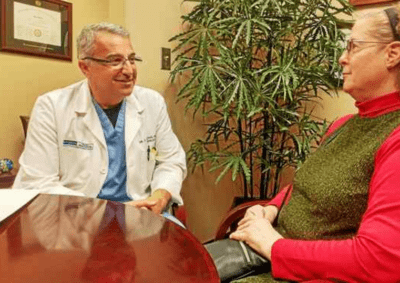
Dr. Sam Kazziha is a board-certified interventional cardiologist who was named Chief Medical Director of McLaren Heart & Vascular Institute in late 2024. The institute was established to unify cardiology, vascular, and cardiothoracic services across all 12 McLaren hospitals, and Dr. Kazziha leads its mission to develop and implement clinical practice guidelines, performance benchmarks, and advanced therapies to best serve patients throughout the state. Under his leadership, the Heart & Vascular Institute has formed physician-led subcommittees for areas such as cardiovascular surgery and PCI (Percutaneous Coronary Intervention), ensuring a team-driven approach to clinical decision-making.
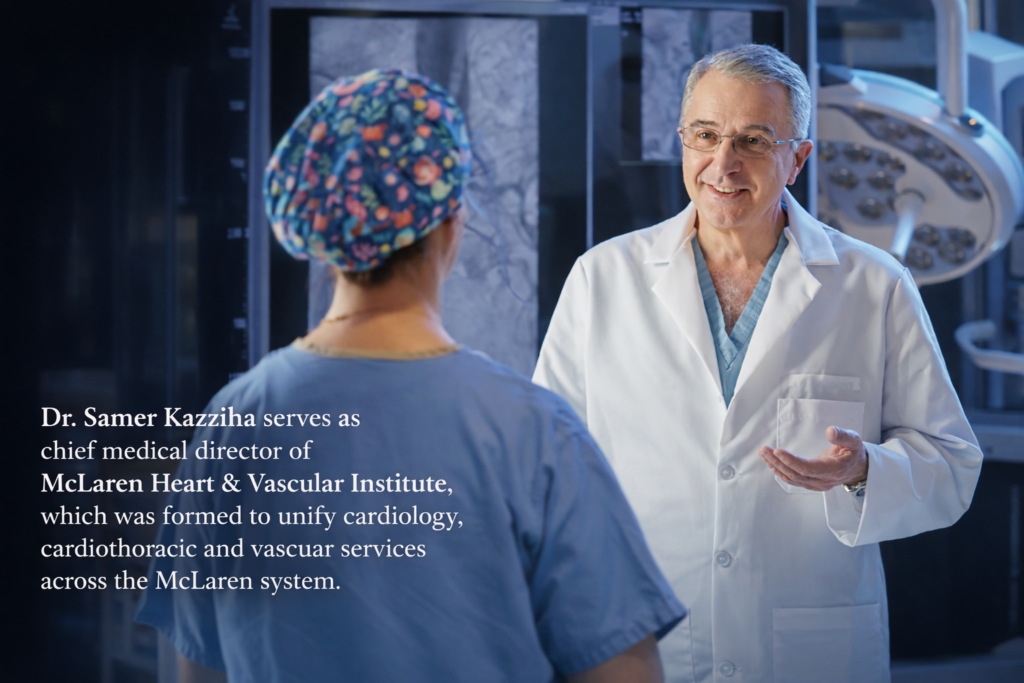
Dr. Kazziha is a strong advocate for system-wide standardization, believing that consistent protocols and procedures across all subsidiaries are fundamental to delivering high-quality care. He emphasizes a continuous improvement model where issues are raised, reviewed, and resolved in a structured, recurring process — creating a constant quality improvement loop. He also champions the use of artificial intelligence in cardiac imaging, noting that AI tools now being integrated into CT scanning technology can identify previously hidden heart and vascular risks, allowing clinicians to intervene before patients are even aware of a potential issue.
Beyond standardization and technology, Dr. Kazziha is focused on advancing cutting-edge therapies such as Extracorporeal Membrane Oxygenation (ECMO), a lifesaving treatment for patients experiencing severe heart or lung failure, which is being developed at McLaren Flint under his direction. He stresses the importance of transparency through participation in national registries like the National Cardiovascular Data Registry, holding the system accountable to both achieving and openly reporting on quality standards. Reflecting on the broader culture he is helping to build, Dr. Kazziha notes that the entire team — administrators and physicians alike — shares a significant desire to progress, improve, and accelerate innovation in cardiovascular care.